


I.
The emergence of generative AI has proved divisive, though not across neat ideological lines. The capitalist right and futurist left appear to both welcome the innovation, regarding the arrival of artificial intelligence as akin to the advent of the printing press. On the other hand, the hippies, conservative luddites and communist left thoroughly reject AI as an existential threat, looming over the Earth with a scythe in one hand and a modest redundancy package in the other. Essentially, our view of AI has much more to do with our general levels of optimism about the world, than it does political inclinations. Reddit demonstrates this divide quite succinctly with the subreddit Futurology and its successor Dark Futurology, the latter of which describes itself as having “emerged from growing dissatisfaction with the utopian tech-porn dominating r/Futurology”.
There is a popular middle ground position on artificial intelligence, however, which is distinctly selective in its view of what is worth automating and what is not. We don’t have to scroll Twitter very long—my apologies for deadnaming, I mean ‘X’—to find arguments to the effect of ‘why are we using technology to replace artist’s jobs rather than the hard jobs no one wants to do?’

This perspective begs a question. Why, exactly, is it more morally virtuous to take jobs away from truck drivers and labourers than from concept artists or, heaven forbid, Substack writers? There are many good ways to criticise AI, but unless the communist revolution is right around the corner, and we’re all about to suddenly and simultaneously retire on Universal Basic Income, then this is just an argument over who deserves to feed their family tomorrow and who doesn’t. A sufficiently embittered person might say, ‘I lost my job to the robot and you said nothing, so let’s see how you like it’. A sufficiently left-wing person might say, ‘also you’re kinda classist’.
Automation for thee, but not for me, so to speak.
But it’s not really the potential double standards or arguable classism that troubles me about this line of thinking… it’s the reality of ever actually putting it into practice. I’ll be the first to agree with the obvious, yes, that removing the artist from the art is a bad thing.
But what does a world without ‘the common man’ look like?
II.
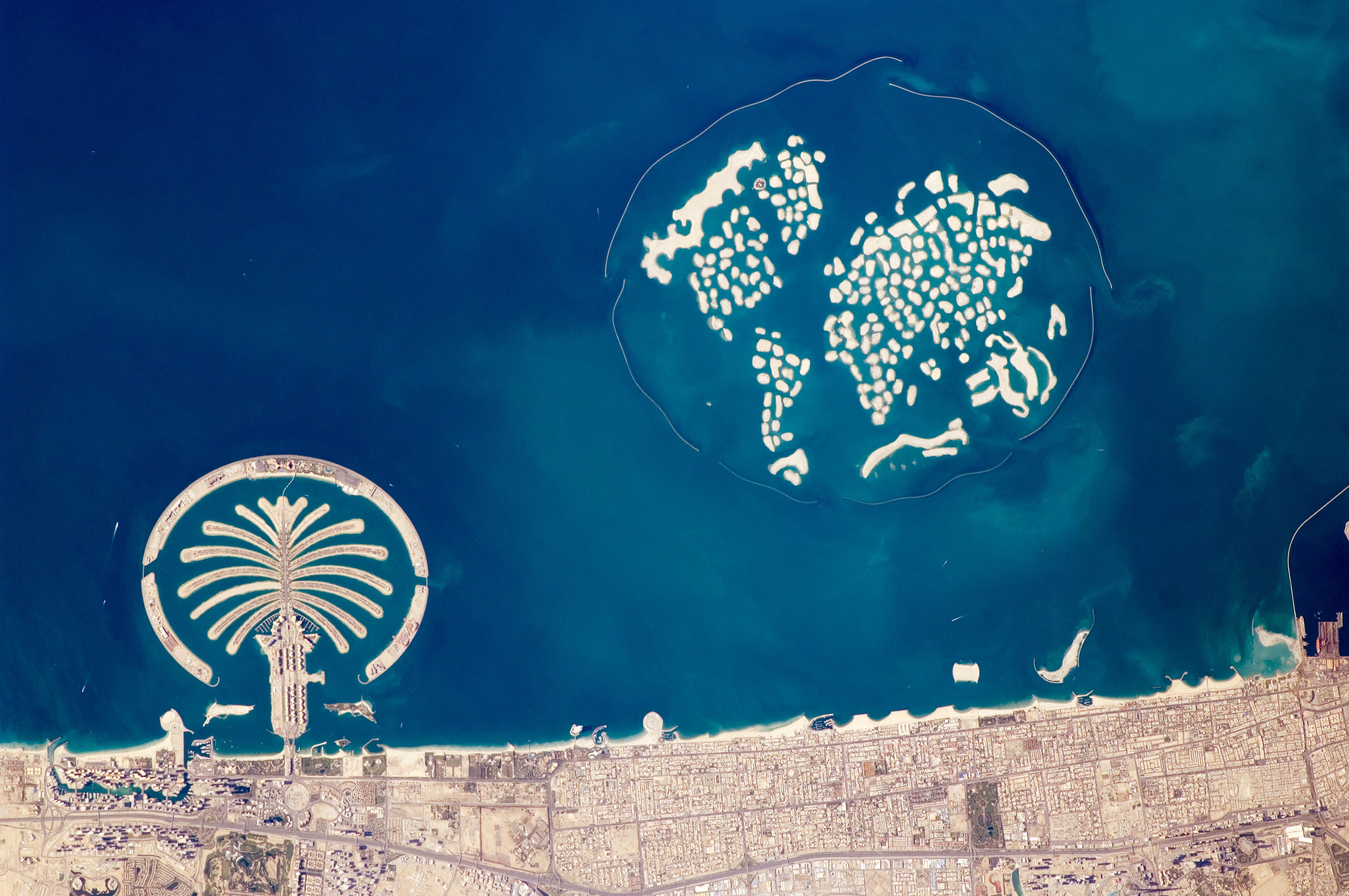
In a worker-less society, the swathes of humanity not a part of the administrative class must find meaning somewhere. That much we can surely agree on. This is where the communist left’s opposition to generative AI is distinctly ideological in nature. For them, the honing of artistic skills and the validation from sharing their work with others would remain a key source of intrinsic gratification in their post-revolution utopia. Introduce generative AI into the mix, where the pinnacle of human ability is a few keystrokes away, and truly, what is left for a simple comrade to pursue and derive satisfaction from? I suppose a lot of yoga studios would pop up. That, and the MAiD clinics presumably now littering every street corner would be churning out enough fertiliser to create their own man-made archipelagos.

Mind you, it’s not just the communists who run into this problem.
Those among the hyper-capitalist right, possessing an obsession with efficiency above any actual moral or philosophical value, naturally see AI as the answer to many of their prayers. Finally, that start-up enterprise they’ve been impregnating with their own enthusiasm is no longer in need of actual cooperative human beings to make reality. If you’ve stumbled onto ‘tech bro twitter’, you’ve learned very quickly that, apparently, the entrepreneurial high-life is now just a ChatGPT subscription away for each of us. Society’s next enlightenment age is upon us and it’s only a question of when we stop being such a burden on the rest of society long enough to become a tech bro millionaire, not if.
The Electric Monk was a labour-saving device, like a dishwasher or a video recorder. Dishwashers washed tedious dishes for you, thus saving you the bother of washing them yourself, video recorders watched tedious television for you, thus saving you the bother of looking at it yourself; Electric Monks believed things for you, thus saving you what was becoming an increasingly onerous task, that of believing all the things the world expected you to believe.
Dirk Gently's Holistic Detective Agency (1987)
Douglas Adams
Ultimately, the communist and the capitalist run into essentially the same solipsistic misunderstanding. Whether steeped in fear or gestating with optimism, both groups are either ignoring or forgetting two inescapable realities—most of us aren’t artists, and most of us aren’t entrepreneurs. Both visions of utopia, one without AI and one with, ignore the fact that most of us exist in the middle of the bell curve, preferring to appreciate art and benefit from entrepreneurship, but not actually participate in either. An entire diverse nation could not sustain its giant collective need for meaning and purpose on a DeviantArt account and an endless stream of GaryVee videos. Removing the artist from artistry might be a bad thing, but removing everyone else from everything ‘i personally don’t like’ is probably also a bad thing. Much of society is already socially isolated, catatonically depressed and psychoactively medicated, and unemployment only increases loneliness—citation probably unnecessary, but alas.
“I used to get up in the morning and there was a reason for it and not just another announcement from the HiveMind on the announcer saying now we were going to fucking try beaming yoga classes into everyone’s apartments at eight in the morning because no one wants to admit that we haven’t got a clue how to stop everyone from killing themselves. […] We thought the Triumph killed suffering, but we’re still suffering: all we killed was any reason for it.”
“adjusting to the triumph“ (2026)
Genre Friction on Substack
In short, the world without work looks a lot less like the orgies of Brave New World and a lot more like the slow extinction of the Mouse Utopia Experiment. I’m aware, of course, that this is the kind of essay which risks saying a lot more about its author than it does the rest of society. Perhaps only I would be a miserable suicidal wretch and everyone else would be getting on quite content with brewing their matcha.
So, for the sake of argument, let’s say that somewhere along the way, after those of us unlucky enough to be born during the purgatorial ‘transition period’ have long passed away in deaths of despair, our children do in fact enjoy and embrace the utopia left in our wake. Suppose that they’ll climb mountains, deepen their yoga practice and create art and that they’ll be entirely fulfilled doing so. What if the years wear on and android dog walkers pass us by and one day, we’ll pause in a vague, sort of foggy moment of recollection, like Muriel squinting at the Seven Commandments in Animal Farm, and wonder—hey, I used to be able to move state without a permit, drive a diesel truck, protest immoral wars, keep a few chickens in the backyard, refuse inoculation, buy cigarettes and make art depicting the current president as an egg.
Where the hell did all that go?
III.
This takes us do the deeper problem with utopia that doesn’t seem to be getting addressed anywhere in the AI debate: if the wrong people were voted in, or took power simply because they had the largest standing army, who would we be to stop them? True, we can barely impact political policy as it is today, but we have something. As consumers, we can boycott. As employees, we can strike. As civilians, therefore, we collectively have the power to bring the country to a stand still in political protest. Canadian truckers and Dutch farmers are proof that normal people can still have an impact, if sufficiently motivated. Indeed, it’s those ‘tedious, gruelling and dangerous’ jobs that retain the necessary economic leverage. Without meaningful roles in the economy, however, we’re powerless. Our sole recourse would be social media, assuming it’s still uncensored, and good old-fashioned violence.
Proponents of utopia, like John Danaher, argue that we could ‘retreat from reality’:
Another way to mitigate this threat would be to build a Virtual Utopia: instead of integrating ourselves with machines in an effort to maintain our relevance in the “real” world, we could retreat to “virtual” worlds that are created and sustained by the technological infrastructure that we have built.
Automation and Utopia: Human Flourishing in an Age Without Work (2019)
John Danaher
This solution runs headlong once again into the same problems. Who designs that technological infrastructure? What body governs its rules? What is civil and legal within the Virtual Utopia and what is not? When our digital companion ‘Sia’ hears us murmur that Taiwan is a country and not a province, who will remotely trigger our aneurysm? In fact, what is to be done about the people uninterested in a retreat into virtua? Are those misanthropic hippies left to roam free? As proven by the modern panopticon we tend to call the internet, replacing our physical infrastructure with virtual infrastructure does not preclude authoritarianism—chiefly, actually, it enables it.
This also is not a problem that can be simply legislated away into obscurity through careful, thoughtful government policy, if such a thing exists. Where there is power, there will be corruption, and I struggle to find a historical example of reformation which was not horrifically bloody or employed substantial economic leverage. A system built with integrity will experience corruption as a bug, not a feature, but it will still happen, given enough time. The levers of power which could insulate us from our corporate overlords, are the same levers that will eventually turn turncoat. This leaves just one question:
Is AI at all capable of improving conditions for our average countryman without forgoing their economic power?
I don’t know the answer, but it’s worth debating, because the problem with utopia is a matter of degrees, not extremes; just as infinity is incalculable, yet numbers are still useful. The threat of utopia is not a practical one, but the threat of ‘utopian thinking’ is real, as any step towards reducing our economic leverage is a step toward powerlessness. For many of us, we got a bitter taste of this reality during the COVID-19 pandemic and its previously discussed measures. After all, there’s a reason the aforementioned truckers made headlines and the pyjama class didn’t, and it’s not just because they have horns.
There’s no freedom without responsibility, but we might specify that even further, and say that freedom is essentially meaningless without the economic leverage with which to attain it and protect it. Or, to sort of quote Uncle Ben, “With no economically essential responsibility, comes no politically viable power.”

As it stands, any utopia we’re at risk of developing would be excruciating to achieve, miserable to exist in, and impossible to reform once gradually and inevitably corrupted. Teach a man to fish—you feed him for a lifetime. Give a man a fish, and he’ll have no means of economic protest when you decide to give him hydraulically pressed blocks of dragonfly protein instead.
Post-Script: This is my first post in quite a while. Two things converged to make this happen. One has two little feet, is very cute and doesn’t sleep. The other is that my country gated access to Substack behind age verification with some third party private company that does not open source its code. The former has restricted my mental capacity, and the latter has stifled my enthusiasm for Substack/the internet at large. I’m not sure what’s next and when, but thank you for reading. And thank you for your patience!
Reject AI Porn, Embrace Tradition

I. Pornography and technology are surely one of the most iconic duos of all time. From the printing press to the internet, from VCRs to online transactions, where the tech industry has ventured nervously, porn has stood right there behind it with a wad of cash and a distracted look in its eye. Today, we’re watching this all play out once again in the dig…
